Sustainable Materials in Beauty Accessories
Something changed in the beauty accessories market in the last week of September 2026. The EU's Empowering Consumers for the Green Transition Directive (ECGT) became applicable on 27 September 2026, and with it, a long list of sustainability claims that brands have been printing on hangtags and product pages for years — "eco-friendly," "climate-neutral," "biodegradable," "100% recycled" — became legally radioactive unless independently verified.
For buyers of hair brushes, makeup bags, eyebrow and lash tools, and mirrors, this lands at the worst possible moment: sustainability has never mattered more to consumers, and sustainability claims have never been riskier to make. This guide is about navigating both sides of that squeeze — sourcing genuinely better materials into your accessory programs, and knowing exactly what you can and cannot print when you do.
Why Accessories Are the Easiest Sustainability Win in a Beauty Program
Makeup formulas take years to reformulate and re-test. Primary packaging needs compatibility studies. But accessories — bags, brushes, combs, mirrors, tools — are the fastest place a brand can visibly shift its material story:
- The materials are simpler. A cosmetic bag is fabric, lining, hardware, and thread. A hair brush is a handle, a cushion, and bristles. Each component can be swapped for a better alternative without a regulatory re-approval process.
- The story is visible. A recycled-PET bag with a visible weave, a bamboo-handled brush, a wheat-straw mirror case — the consumer sees the difference in the product photo. No label reading required.
- The margins absorb it. Material premiums on accessories typically run 0.05–0.05–0.40 per unit at OEM volumes — a fraction of what the same sustainability story costs in formula or primary packaging.
That is why accessory-led sustainability has become the default first move for mid-size beauty brands building a greener line. The question is not whether to do it. The question is which materials are actually better, what they really cost, and how to talk about them without breaking the new rules.
The Material Landscape, Category by Category
Makeup Bags: Where Recycled Content Is Most Mature
| Material Option | What It Is | Typical Cost Delta vs. Standard PU | Sustainability Reality | Best For |
|---|---|---|---|---|
| rPET (recycled PET) fabric | Woven fabric from post-consumer bottle flake; often 600D or twill weaves | +8–15% | Genuine diversion of plastic waste; GRS (Global Recycled Standard) certification verifies content claims | DTC brands, gift-with-purchase, travel sets |
| Recycled PU (rPU) | PU coating incorporating recycled polyester backing or bio-based polyols | +10–20% | Better than virgin PU, but "recycled PU" claims vary enormously — verify what percentage is actually recycled | Mid-market cosmetic cases |
| Organic cotton canvas | GOTS-certified cotton, often natural or low-impact dyed | +20–35% | Strong agricultural story; water footprint is the honest weak point — discuss openly | Premium and wellness-positioned brands |
| Hemp / hemp-blend fabric | Hemp or hemp-cotton blends | +25–40% | Low-input crop, naturally antimicrobial marketing angle (careful — BPR territory if making antimicrobial claims) | Eco-forward niche brands |
| Wheat straw / rice husk composites | Agricultural waste fiber blended with PP for hard shells | +5–12% | Real waste diversion; look and feel is speckled "natural" — some markets love it, some read it as cheap | Hard cosmetic cases, mirror housings |
The workhorse is rPET. It is the most certified, most available, and most price-stable of the options, and it pairs with the clearest certification trail (GRS with transaction certificates). A 2026 rule of thumb: any recycled-content claim below 50% verified content is increasingly hard to defend in an EU retail environment — buyers should specify minimum verified percentages in the RFQ, not just the word "recycled."
Hair Brushes: The Bamboo Question, Answered Honestly
Bamboo is the most requested "sustainable" handle material in hair brush programs, and it deserves a more honest treatment than most marketing gives it:
- Bamboo is fast-growing and low-input. As a crop, it genuinely outperforms hardwood on regeneration.
- Processing matters more than the crop. Bamboo that is laminated with high-formaldehyde adhesives into "bamboo board" can be a worse indoor-emissions story than a well-managed FSC hardwood. Ask for the adhesive spec (look for E0/E1 formaldehyde classes) alongside the species.
- EUDR does not apply. Bamboo is treated as a non-wood forest product outside the EU Deforestation Regulation's Annex I — but document the reasoning, because your EU importers will ask (see our compliance scope map for the full category table).
- Finish compatibility. Bamboo's silica content makes some laser-marking and coating processes behave differently than wood — worth confirming in the sampling stage rather than at mass production.
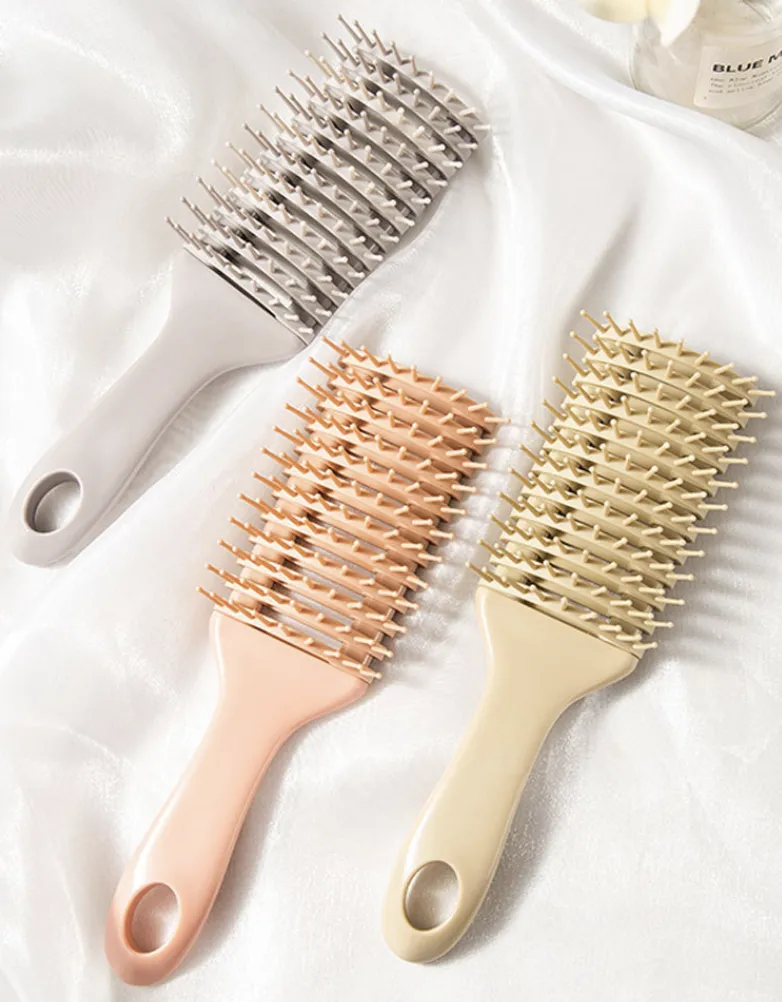
For bristles, the sustainability conversation is mostly about longevity, not material novelty: a boar-bristle brush properly made lasts 5–10 years of daily use, which is a better lifecycle story than three synthetic brushes replaced over the same period. Material durability is a legitimate sustainability argument — and unlike "eco-friendly," it is a verifiable one. Our hair brush OEM sourcing guide covers the bristle grades and moisture-control specs that determine whether that longevity claim holds up.
Eyebrow & Lash Tools: Durability Is the Whole Story
Metal tools are the simplest sustainability category in accessories, because the winning strategy is not a new material — it is a better grade of the same one:
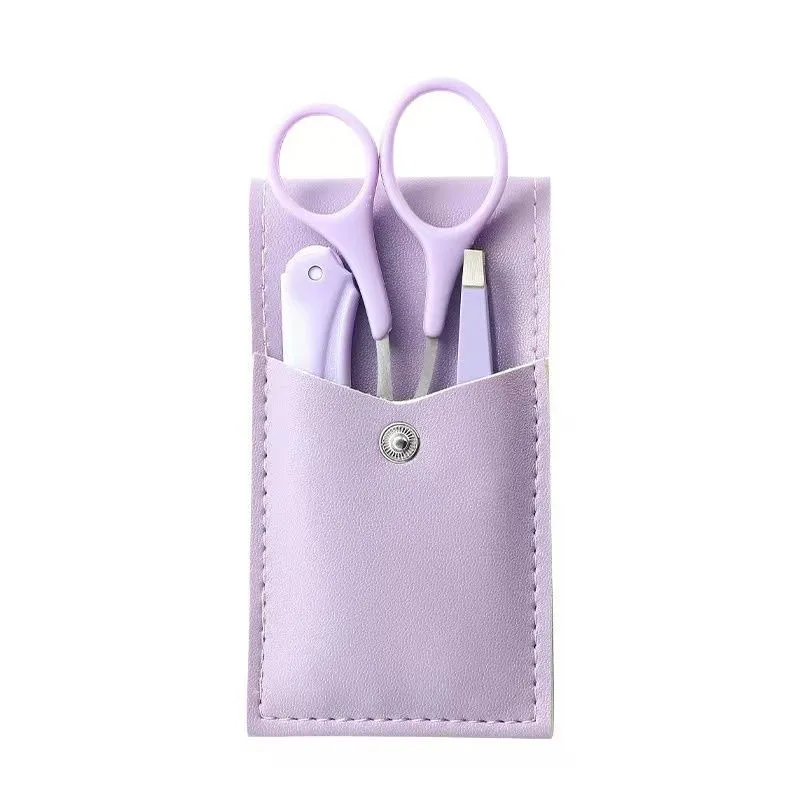
- Stainless steel over plated carbon steel. A 304 or 316 stainless tweezer is fully recyclable, avoids the plating layer (and its failure mode), and outlives plated versions many times over. The catch we covered in our eyebrow and lash tools sourcing guide: cheap plated carbon steel fails nickel-release testing anyway, so the sustainable choice and the compliant choice are the same choice.
- Recycled stainless steel is increasingly available at modest premiums and carries a clean, verifiable recycled-content story.
- Plastic-reduced packaging matters more here than the tool itself — tools ship in small blister or card formats where a switch to molded pulp or card-based retention is cheap and visible.
Mirrors: LED Efficiency and Housing Materials
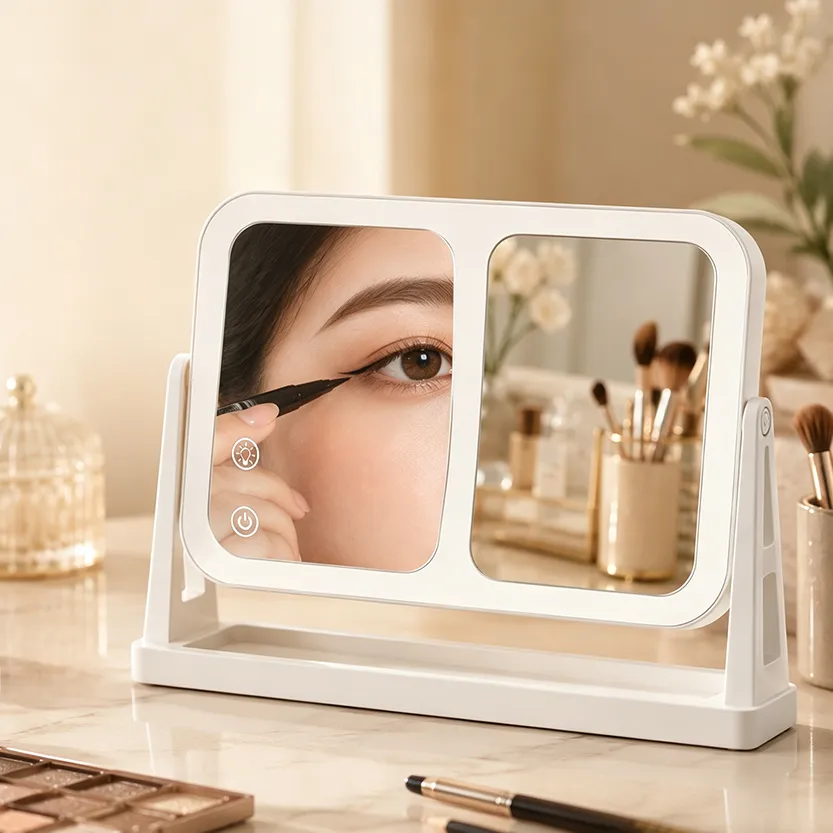
For illuminated mirrors, the sustainability conversation is dominated by two components: the LED system (efficiency class and rated life — a 50,000-hour LED is both a lifecycle and a warranty argument) and the housing (recycled ABS or aluminum housings are now specifiable at minimal premium). The "sustainable mirror" story in 2026 is really an energy and durability story.
The ECGT Rules: What You Can and Cannot Print After 27 September 2026
This is the section buyers should screenshot. The ECGT Directive (EU) 2024/825 is now applicable law across the EU:
| Claim | Status Under ECGT | What To Do Instead |
|---|---|---|
| "Eco-friendly" / "environmentally friendly" (generic) | Banned unless recognized excellence performance with proof | State the specific verified attribute: "made with 70% GRS-certified recycled polyester" |
| "Climate-neutral" / "carbon-neutral" (offset-based) | Banned — offsetting-based neutrality claims are expressly prohibited | Report measured footprint reduction targets if you have them; otherwise stay silent on climate |
| "Biodegradable" (unqualified) | High risk — general environmental claims need proof of excellence | Only with recognized standard + conditions specified (e.g., industrial composting certification) |
| "100% recycled" | Allowed only if the entire product is recycled content | "Fabric made with 70% recycled polyester (GRS-certified)" — scope the claim to what is true |
| "Green" / "sustainable" (as a standalone label) | High risk | Same as eco-friendly — replace with specific attributes |
| Future performance commitments ("will be zero waste by 2030") | Allowed only with clear, time-bound, verifiable commitments | Only publish commitments with a published implementation plan |
Three practical consequences for accessory programs:
- Artwork freezes earlier. Because claims now need verification documentation in place before printing, sustainable-material programs need their certification paperwork (GRS scope and transaction certificates, test reports) finalized at the pre-production sample stage, not at shipment. This changes your critical path.
- The word "recycled" needs a scope. "Recycled makeup bag" is a claim about the whole bag — lining, zippers, thread included. Most real products qualify for a component-scoped claim ("outer fabric made with recycled polyester"), and that is what the artwork should say.
- Sustainability labels you invent are dangerous. Self-made green seals and badges are exactly what this directive targets. Use recognized third-party schemes (GRS, GOTS, FSC) or specific attribute statements — nothing in between.
Note the distinction that keeps tripping people up: the Green Claims Directive (a separate, stricter proposal on substantiation methodology) was suspended and is slated for withdrawal — it is not law. ECGT is. Our compliance scope map for beauty accessories covers how these frameworks layer across categories.
A Realistic Cost Picture
Sustainable accessory programs fail when buyers budget for the material premium but not for the documentation. At 2026 OEM volumes, expect:
| Cost Element | Typical Range | Notes |
|---|---|---|
| rPET fabric premium | +8–15% vs. virgin polyester | Price gap has narrowed steadily since 2023 |
| Bamboo handle vs. standard wood | +10–20% | Includes machining adjustments |
| 304 stainless vs. plated carbon steel | +15–25% | Largely offset by lower return rates |
| GRS certification / transaction certificates | Amortized per order; modest | Certification sits with the material supplier — confirm access in writing |
| Claim-substantiation documentation | Internal time cost | The real bottleneck is calendar time, not money |
The honest summary: a credible sustainable accessory program adds roughly 10–20% to landed cost, most of which consumers in EU and North American markets have shown willingness to pay — provided the story is specific, certified, and visible. What they will not pay for anymore, and what regulators will increasingly fine you for, is vague green decoration.
An OEM Specification Checklist for Sustainable Accessory Programs
Bring these eight line items to your next RFQ:
- Material with minimum verified recycled/bio-based content percentage, per component
- Certification — scheme name (GRS / GOTS / FSC / others), certificate number, and who holds it
- Transaction certificates — confirm availability for your specific production lot
- Claim scope statement — exactly what component the sustainability attribute applies to, in artwork-ready wording
- Adhesive / coating specs for bamboo and composite materials (formaldehyde class E0/E1)
- Durability specs — the longevity argument needs cycle-test numbers to stand on (zip cycles, spring cycles, LED rated life)
- Packaging — recycled content and plastic reduction for the packaging itself, so the product's story isn't undercut by its box
- Change-notification clause — material substitutions must be notified and re-approved, because a silent substitution can invalidate every claim printed on your artwork
That last item is the one most programs miss — and under ECGT, an unnotified material change doesn't just change the product; it silently converts your printed claims into violations.
FAQ
Q1: Is "vegan" a regulated claim for accessories like it is for cosmetics? "Vegan" on accessories is primarily a labeling accuracy question rather than a cosmetic-regulation one: it means no animal-derived components (boar bristle, leather, beeswax-based finishes, animal glues). It is generally safer territory than generic green claims, but it must be literally true across every component — including adhesives, which is where animal-derived products historically hide. Request a material composition declaration per SKU.
Q2: Our brand sells in the US. Does ECGT affect us? ECGT applies to the EU market. But US enforcement has its own mechanism — the FTC Green Guides — which targets the same generic-claim behavior. Since artwork is usually shared across markets, the practical answer is: build to the stricter standard and your claims work everywhere.
Q3: Is bamboo really more sustainable than plastic for hair brush handles? On raw material grounds, yes — fast regeneration, low agricultural input, biodegradable at end of life. But the full picture depends on the adhesive system in laminated bamboo and the transport footprint. The defensible position: bamboo is a better crop story than plastic is a petroleum story, and the claim to print is "bamboo handle," which is simply true — not "eco-friendly," which invites scrutiny.
Q4: What's the minimum order situation for sustainable material versions? Material availability, not MOQ, is the usual constraint. rPET and bamboo are widely stocked at component suppliers, so MOQs typically match standard programs. Specialized certifications or unusual composites (wheat straw housings, recycled stainless) may carry higher minimums or longer lead times — worth confirming during the sourcing stage rather than at order placement.
Q5: Can we just skip sustainability claims and sell the product on quality? Absolutely — and for some programs that is the right call. Nothing in ECGT requires sustainability features; it regulates claims, not materials. A quality-and-durability story ("built to last 5+ years of daily use") is fully defensible and resonates with the same buyers. Sustainability content is an option, not an obligation.
The Takeaway
The 2026 sustainable accessories play is narrower than the marketing of 2023 implied — and much more defensible because of it. Pick specific materials with real certifications. Scope every printed claim to exactly what the certificate covers. Get the paperwork done before the artwork is finalized. And when in doubt, sell durability: it is the one sustainability claim that never needs a footnote.
At Fay Makeup we manufacture hair brushes, makeup bags, eyebrow and lash tools, and mirrors with material documentation available at the sampling stage — including recycled-content options, adhesive specs for bamboo programs, and artwork-safe claim wording reviewed against current EU requirements.
Send us an inquiry to request sustainable material samples, or ask our team to review your current artwork claims before your next production run.
The B2B Sourcing Guide to Makeup Mirrors
The B2B Sourcing Guide to Eyebrow and Lash Tools
Related Article