The B2B Sourcing Guide to Hair Brushes
Hair Brush Specifications
Hair brushes are the highest-repeat-purchase item in a beauty tool program. They are lost, broken, left in hotel rooms, and replaced far more often than brushes. That combination — high reorder frequency with low buyer specification literacy — makes this category worth getting right once and then scaling.
This guide covers the structural variables, the material grades, the QC tests, and the compliance picture for hair brushes and combs.
The Hair Brush Range, in Sourcing Terms
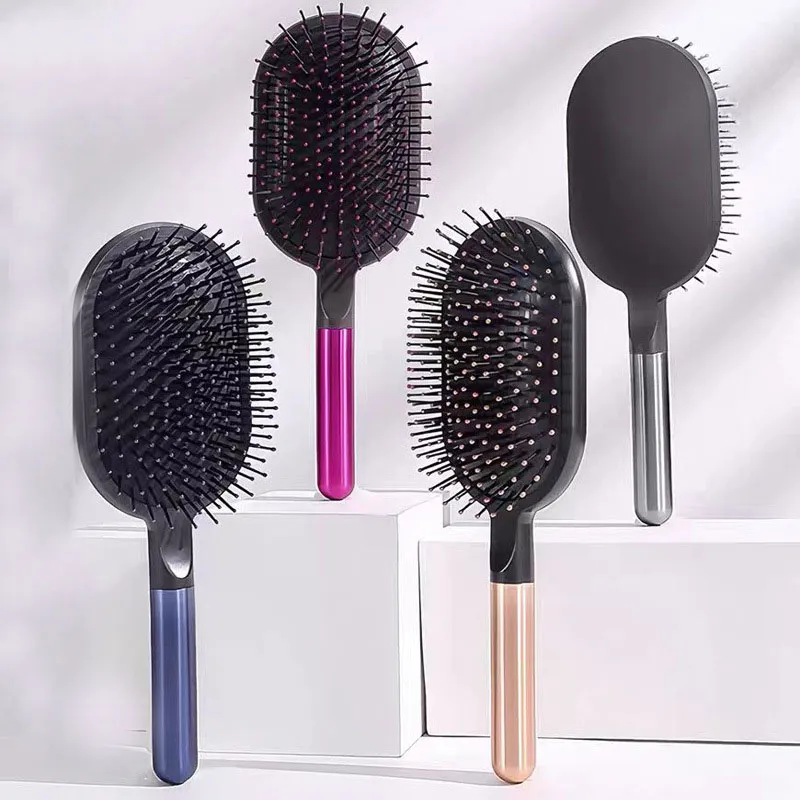
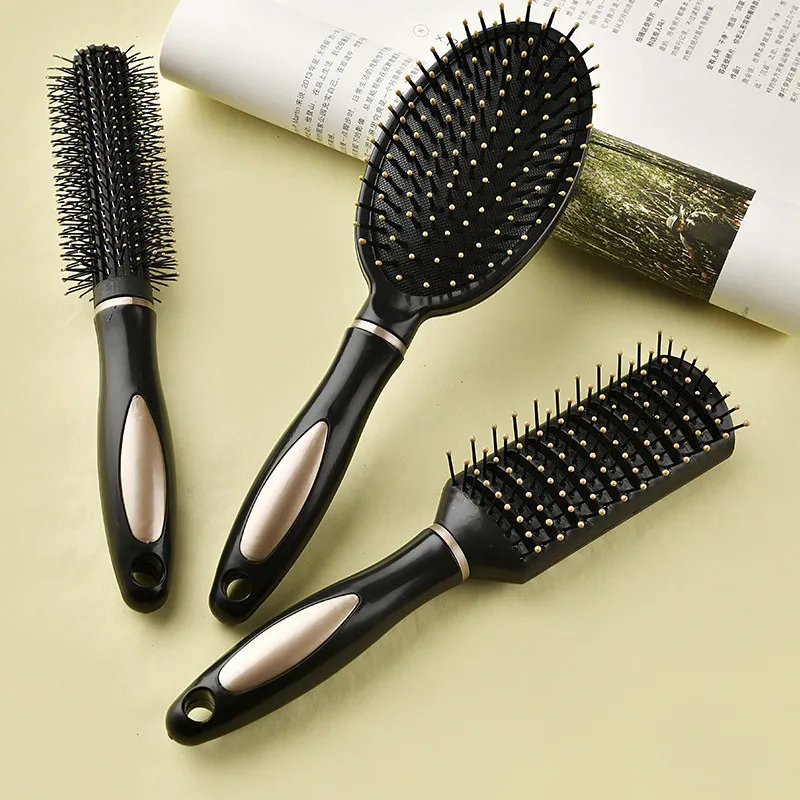
"Hair brush" is a product family, not a product. The commercial sub-types behave differently in manufacturing, so it helps to group them by the construction that actually drives cost.
| Type | Construction | Typical Positioning | What Drives Cost |
|---|---|---|---|
| Paddle brush | Wide flat cushion, dense bristle bed | Blow-dry smoothing, long hair | Bristle count and pad dimensions far more than the handle |
| Cushion brush | Air-, foam- or rubber-filled pad with ball-tip bristles | Everyday detangling | Pad construction determines whether it survives handling |
| Round brush | Ceramic or metal barrel, bristle or boar mix | Blow-dry styling | Barrel coating and heat tolerance |
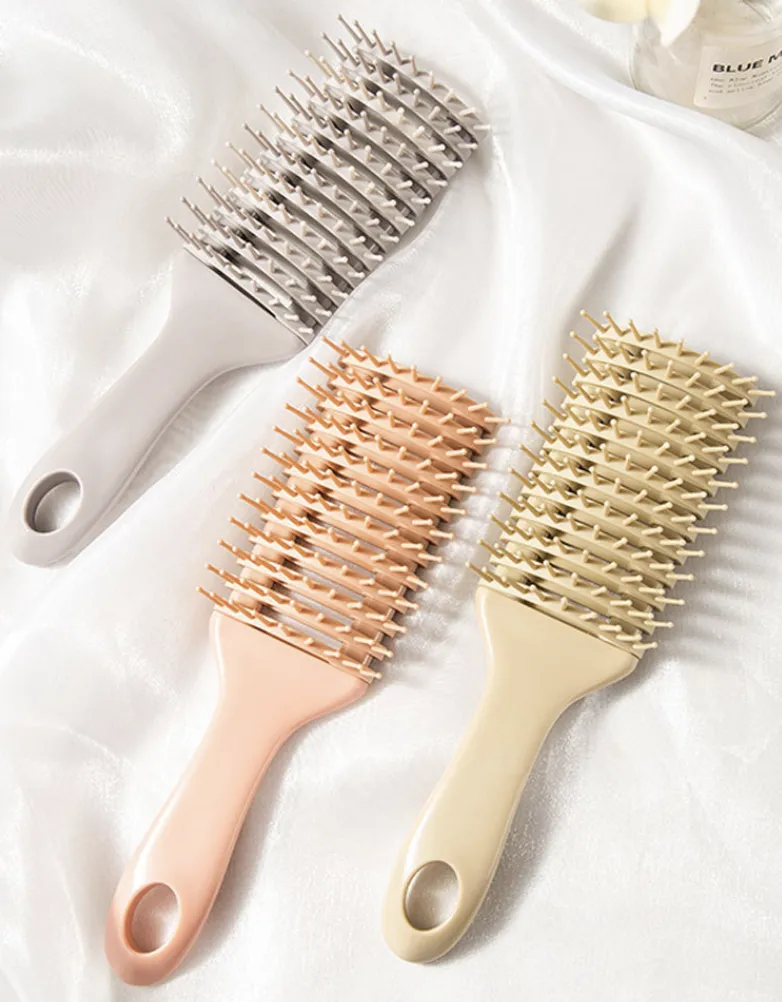
| Vent brush | Open-frame moulded body | Fast drying | Lowest tooling barrier; a natural entry SKU |
| Detangling brush | Flexible silicone or memory-resin pins | Wet hair, children | Pin flex and tip softness are the product |
| Pin / scalp brush | Wood or bamboo body, wooden or silicone pins | Scalp care, wellness | The fastest-growing sub-type in this family |
| Tail comb / wide-tooth comb | Injection-moulded | Sectioning, styling | Mould cost amortised over very high volume |
| Classic boar bristle brush | Natural bristle in cushion or flat-back body | Shine, natural-oil distribution | Bristle grade — the single largest cost and claim variable |
Two practical notes for planning. First, the moulded sub-types (vent brushes, combs) are tooling-led programs that reward volume; the natural-bristle sub-types are labour-led programs where unit cost tracks bristle grade and tufting density. Second, a set that mixes both can carry one private-label identity across price tiers without needing two factories.
Bristle and Pin Materials Compared
The bristle decision is the first and most consequential specification choice. It determines cost, the marketing claim you can legally make, and how the product behaves in a customer's hair.
| Material | Function | Durability | Best For |
|---|---|---|---|
| First-cut natural boar bristle | Carries scalp oils down the hair shaft, smooths the cuticle | Good when correctly processed | Premium shine and smoothing positioning |
| Lower-grade or trimmed boar bristle | Similar mechanism, coarser and stiffer | Moderate | Mid-tier programs, blended brushes |
| Nylon monofilament, ball-tip | Glides, detangles | Very good | Everyday cushion, vent and paddle brushes |
| Silicone / TPE pins | Flexes through knots without pulling | Good | Detanglers, children's lines |
| Wooden pins (boxwood, beech) | Anti-static, massage hand feel | Good, finish-dependent | Wellness and scalp-care SKUs |
| Mixed boar + nylon | Grip plus glide in one head | Good | The commercial default for premium-adjacent SKUs |
Bristle Grade Is the Variable Most Buyers Never Ask About
Natural bristle is graded by cut. First-cut bristle retains its natural tapered tip and gives the smooth, non-scratching glide that premium brushes are sold on. Lower cuts are trimmed blunt, which is faster and cheaper but stiffer and harsher on the scalp. Two suppliers can quote "100% boar bristle" at very different prices because they are quoting different grades.
Ask for: the bristle grade in writing, the cut level as a share of total bristle, and the country of origin of the bristle itself — not just the country of assembly.
Ball Tips: Rounded or Coated?
On nylon bristles, the tip treatment decides whether the brush feels comfortable or scratches. A properly formed ball tip is melted and rounded with no seam, sprue mark or split. Cheap tips are cut and tumbled, which leaves micro-edges that catch hair.
Ask for: a seamless ball-tip declaration and a magnification-level inspection standard in the PP sample approval.
Handle Materials: Where Programs Quietly Fail
Handles look like the simple half of the product. In practice handles generate a disproportionate share of after-sales problems, because the failure is delayed — a handle that cracks does so weeks after the container clears customs.
| Material | Hand Feel | Principal Risk |
|---|---|---|
| Hardwood (beech, maple, walnut) | Warm, moderate weight | Cracking and warping if moisture content is not controlled |
| Bamboo | Light, sustainable story | Natural knots and colour inconsistency between units |
| ABS / PP plastic | Light, low cost | Perceived as disposable unless finished well |
| Cellulose acetate | High gloss, marble and tortoise effects | Higher material and polishing cost |
| Resin / acrylic | Can imitate wood or be transparent | Lighter weight feel than wood; scuffing |
| Metal or aluminium-wood hybrid | Premium, cool to the touch | Requires salt-spray testing for plating |
Moisture Content Is the Specification That Saves Your Program
If you specify one technical requirement on a wooden-handle brush, make it this. Kiln-dried timber should be held to roughly 8–12% moisture content at the handle stage, and re-checked on the finished, coated product. Timber shipped at higher moisture content looks perfect in the factory's humid climate and then shrinks and splits once it reaches a dry retail market or a heated home.
The supporting measures matter as much as the number:
- Sealed end grain — the end face of a handle is where cracking starts, because it exposes open fibres. A sealed end costs almost nothing.
- A defined finish system — lacquer, oil-wax or UV cure; each behaves differently against hand oils and alcohol-based products.
- A stabilising period between machining and finishing, so the timber can move before it is locked under a coating.
Cushion Construction: The Hidden Failure Point
On cushion, paddle and pin brushes, the pad is the part that fails first. Three constructions are common, and they are not equivalent.
- Air cushion — a sealed bladder. Softest hand feel, and the most fragile: once it leaks, the brush is effectively dead.
- Foam pad — cheapest, and prone to crumbling or compressing permanently under repeated use.
- Solid rubber or TPE pad — heavier, and by a wide margin the most durable option. The right choice for any SKU positioned above entry level.
The bond between pad and body matters as much as the pad itself. Mechanically keyed or riveted assembly outlasts adhesive-only assembly, particularly in warm climates and shipping containers where adhesive softens. If your supplier can only offer adhesive, specify the adhesive class and add a load test to your inspection plan.
The other structural variable is how bristles are fixed to the head:
| Method | How It Works | Cost | Best For |
|---|---|---|---|
| Drilled and tufted | Holes drilled, tufts anchored by wire or adhesive | Higher — manual content | Natural bristle products, premium positioning |
| Injection-moulded | Bristle or pin formed as part of the moulded body | Lower — tooling-led | Nylon and silicone products at volume |
Drilled-and-tufted construction is what allows genuine natural-bristle products to exist; moulded construction cannot reproduce a tapered boar bristle. When a supplier quotes "boar bristle" at a moulded-brush price, that is the question to ask.
Quality Control: The Tests to Write Into Your PO
Each test below maps to a real customer complaint. Add the relevant ones to your order specification rather than relying on a factory's standard process.
| Test | Method | Prevents |
|---|---|---|
| Tuft pull force | Pull a defined sample of tufts at a controlled rate to a stated threshold | Bristle shedding — the number one complaint in this category |
| Ball-tip integrity | Visual inspection at magnification for seams, splits, sprue marks | Scalp scratching, hair catching |
| Cushion bond load test | Apply a defined load to the pad-to-body joint | Pad detachment after drops or heat exposure |
| Moisture content (wood) | Meter on finished handles, sampled across the lot | Cracking and warping in dry markets |
| Drop test | Repeated drops onto a hard surface from a set height | Brittle bodies, cracking finishes |
| Heat tolerance (round brushes) | Exposure to blow-dryer operating temperatures | Barrel deformation, bristle softening |
| Anti-static performance | Surface resistivity or a comb-through evaluation | Unsubstantiated static claims |
| Coating adhesion | Cross-hatch or solvent rub on the finished surface | Peeling lacquer and skin-contact concerns |
Two notes on using this table properly. First, request lot-level records, not a one-off first-sample report — the failure mode in this category is batch-to-batch variation, especially in moisture content and tuft anchoring. Second, capture the agreed thresholds in the approved-sample record. That single document is your defence in any quality dispute, and it is nearly free to create at sampling stage.
Compliance for Hair Brushes: What Applies, and What Does Not
Hair brushes attract less regulatory attention than most buyers assume — and much of what circulates online about wooden handles is wrong. Here is the accurate picture.
EUDR does not cover hair brushes or combs. Under the EU Deforestation Regulation, scope is set by whether the product's Combined Nomenclature code appears in Annex I — not by the material it contains. Hair brushes sit under heading 9603 and combs under 9615, both in Chapter 96, which is not listed. A finished hair brush or comb is therefore out of scope regardless of whether the handle is wood, bamboo or plastic. Where EUDR genuinely reaches an accessory program is wooden furniture and fixtures — wooden mirror frames (CN 4414), wooden organizers and display stands (4421 / ex 9403). Our compliance scope map for beauty accessories walks through the category-by-category boundaries, including the packaging nuances that catch people out.
REACH applies to the finish, not the timber. Coatings, dyes, lacquers and any preservative treatment on wooden or bamboo components are within reach of EU chemical restrictions. Request the supplier's restricted-substance declaration rather than relying on a verbal assurance — and re-request it after any change of finish supplier.
Animal-origin components carry their own documentation. Boar bristle programs should be able to produce a declaration of species, origin and hygienic treatment, and buyers should confirm their destination market's requirements for animal-origin parts before building a product claim around them.
FSC certification is optional but commercially useful. EUDR does not require it for brushes and combs, but European retailers increasingly ask. FSC chain-of-custody documentation for wooden and bamboo handles is a marketing asset and a time-saver in retailer questionnaires, not a legal obligation.
Packaging and green claims apply to everything. PPWR (EU 2025/40) governs cartons and retail packaging; ECGT (Directive EU 2024/825) bans unsubstantiated generic environmental claims from 27 September 2026. Category copy leans heavily on words like natural and sustainable, which is exactly where substantiation files are needed.
Writing the Specification: A Template You Can Send to a Factory
| Field | What to Specify |
|---|---|
| Product type | Paddle / cushion / round / vent / detangler / pin / comb |
| Bristle or pin material | e.g. first-cut boar, 100% nylon ball-tip, silicone TPE, boxwood pins |
| Bristle length and density | mm length; tufts per cm² or total tuft count |
| Tuft fixing | Drilled and tufted vs injection-moulded; pull-force threshold |
| Cushion construction | Air / foam / solid rubber; bond method (keyed vs adhesive) |
| Handle material | Wood species / acetate / ABS; moisture content if wood |
| Handle finish | Lacquer / oil-wax / UV; end grain sealed (yes/no) |
| Dimensions | Overall length, head width, handle diameter, weight |
| Colour and branding | Pantone reference; logo method (laser, pad print, hot stamp) |
| Compliance and testing | REACH declaration, animal-origin declaration, tuft pull force, moisture content, drop test |
Most disputes in this category trace back to a field that was left blank at quotation stage and filled in by assumption at production stage.
Commercial Terms: MOQ, Tooling and Private Label
The economics split cleanly by construction type.
Moulded programs (combs, vent and detangler brushes) are tooling-led. Moulds are the entry cost and MOQs are typically low thousands of pieces per SKU. Once tooling is amortised, unit economics improve sharply with volume, and colour changes are comparatively cheap.
Natural-bristle programs are labour-led. Drilled-and-tufted heads involve hand work, so MOQs are higher and unit cost tracks bristle grade and tuft density rather than order size. Expect less price elasticity here.
Branding has a low entry point. Laser engraving or hot-stamping on a wooden handle is the cheapest credible private-label route and requires no tooling beyond a fixture. Pad printing on moulded bodies is similarly accessible. The real MOQ driver in this category is packaging — custom-printed boxes carry their own tooling structure and usually set the true minimum order far above the product itself. If you are launching on a tight budget, start with a generic box and a printed label, then upgrade the packaging once the SKU proves out.
A note on buying the whole tool kit together. Hair brushes, makeup brushes, bags and mirrors are bought by the same buyer, sold in the same aisle, and repurchased on different cycles. A retailer sourcing a complete hair and beauty tool offering from three suppliers pays three sets of freight, documentation and vendor-management overhead. Our hair brush factory program, makeup bag manufacturing, eyebrow and lash tools and the brush manufacturing side of the business are built to be quoted as one shipment for exactly this reason.
Frequently Asked Questions
Q1: Is boar bristle better than nylon? They do different jobs, so neither is universally better. Natural boar bristle carries scalp oils down the hair shaft and smooths the cuticle, which supports shine and smoothing claims. Nylon monofilament glides more freely, detangles more effectively and lasts longer, which suits everyday cushion and paddle brushes. The commercial sweet spot for most retail programs is a mix of boar and nylon in one head — and note that within boar bristle, the cut grade matters more than the "100% boar" label.
Q2: My wooden handles are cracking after shipment. Why? Almost always moisture content. Timber kiln-dried to a low figure in a humid factory still absorbs ambient moisture, and if handles are finished at high moisture content they shrink and split once they reach a dry retail market or a heated home. Specify a moisture content window — roughly 8–12% is a common target — require lot-level meter readings on the finished product, and make sure end grain is sealed. This is a specification fix, not a supplier lottery.
Q3: What MOQ should I expect for a private-label hair brush? For moulded products such as combs and vent brushes, low thousands of pieces per SKU, with tooling as the main entry cost. For drilled-and-tufted natural-bristle brushes, expect higher minimums because of the hand work involved. In both cases packaging usually raises the effective MOQ more than the product does — a generic box with a printed label is the standard low-barrier launch format.
Specify the Product Once, Then Scale It
The expensive way to buy hair brushes is to approve a sample by eye and discover the gaps through returns. The cheap way is to write the six or seven variables that actually drive performance — bristle grade, tip treatment, tuft fixing, pad construction, moisture content, finish system, and the test thresholds that hold them all in place.
Contact our team to request hair brush samples with material and grade specifications, or to build a combined hair-and-beauty tool quotation for your market.
Top Rated Good Hair Brushes for Curly Hair
Related Article